
Amidst a changing climate there is growing recognition that Australian communities need a new and better way to deal with bushfires, floods and other disasters, not only to protect people and property, but to support community recovery and longer-term resilience building.
In the wake of devastating and widespread bushfires on the east coast of Australia in 2019/2020, Fire to Flourish, led by Monash University and co-funded by PRF and Metal Manufactures Pty Ltd, with additional support from the Lowy Foundation, was established as a collaborative community-led program to do just that.
Partnering with communities in four regions affected by disaster across NSW and Victoria, Fire to Flourish supports participatory grantmaking, capability building, and community governance tools and processes. The program is underpinned by robust research to encourage the adoption of evidence-informed recovery and resilience solutions at both local and national levels.
Community-led impact in Eurobodalla
One of the Fire to Flourish communities is Eurobodalla on the South Coast of NSW, stretching across Walbunja, Brinja-Yuin and Djiringanj Country. Eighty per cent of the Council area burned in the fires, including 500 homes, and in 2020 and 2021 the region experienced flooding that caused further damage to environment and infrastructure which had not yet recovered.
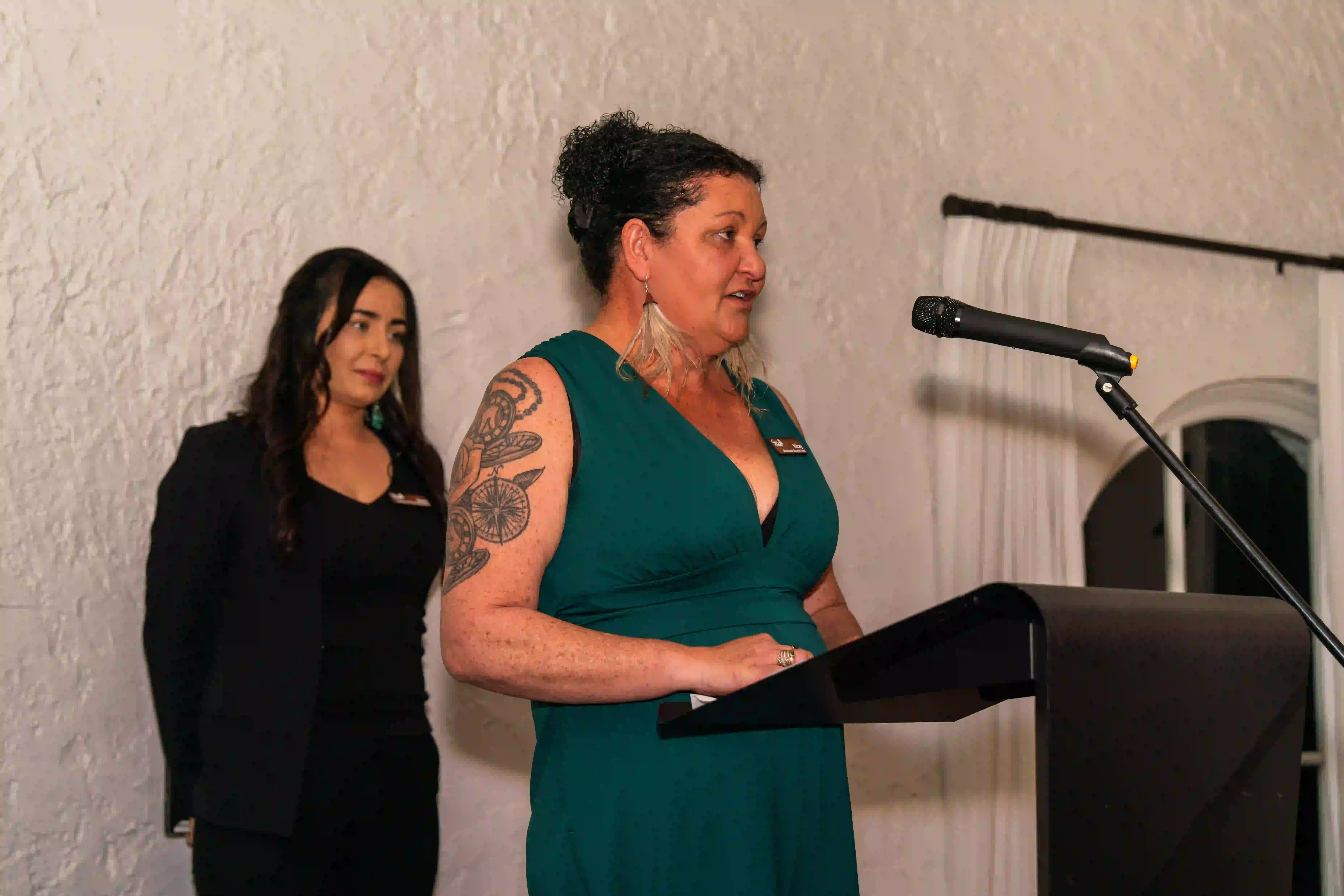
Community Lead, and proud Walbunga woman of the Yuin Nation Kizzy Nye, says when they started participatory grantmaking in Eurobodalla, the main objective was to build social capital.
“Fire to Flourish gave community the opportunity to make decisions about their own recovery,” she says. “They hadn’t been asked before.”
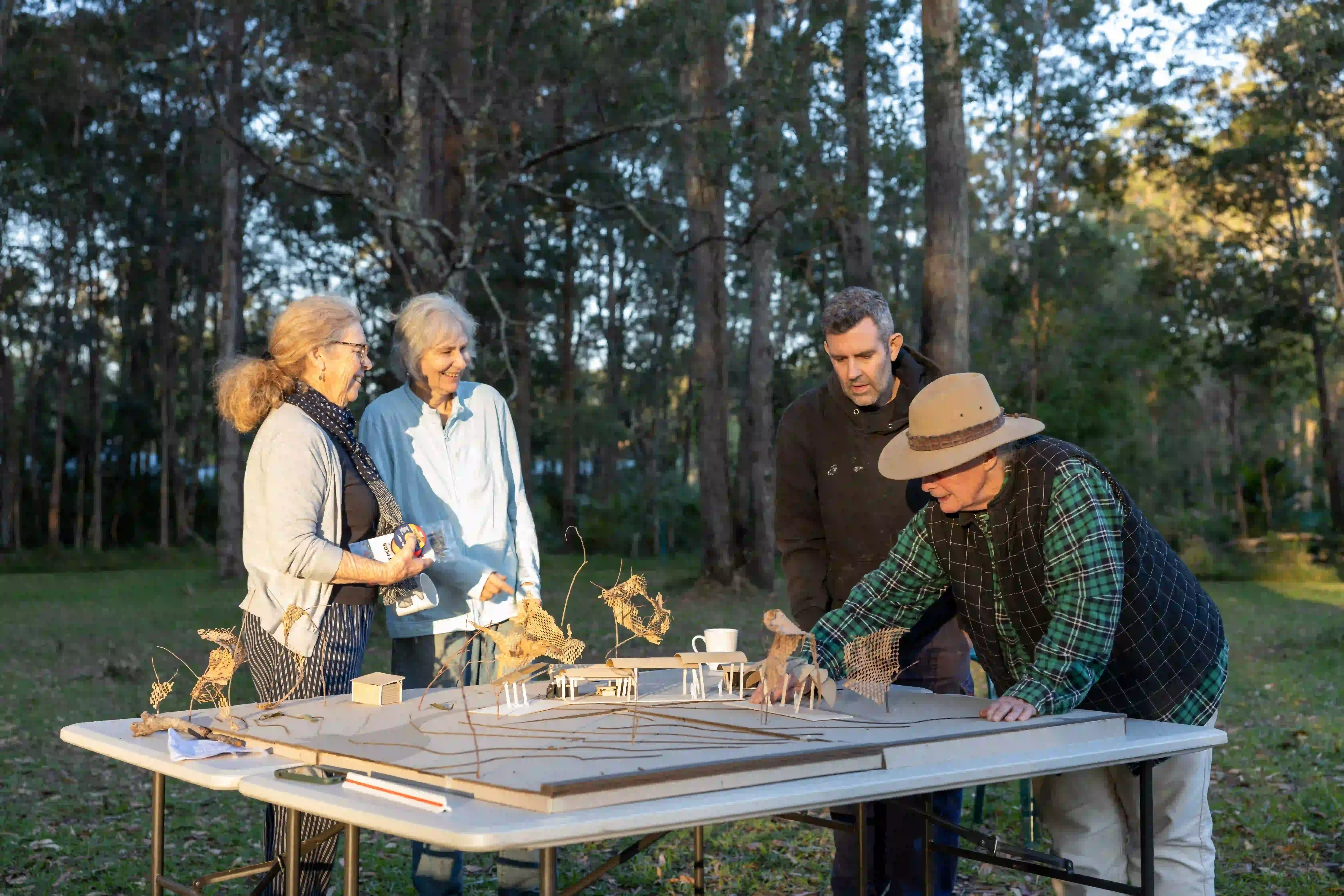
The process brought together community members to identify local priorities, engaged mentors to build local grant writing capacity, and used a deliberative process to award funding.
“It was important to meet people on their terms, and where they were at,” says Kizzy.
The approach was grounded in inclusion and accessibility, ensuring all community members could participate without barriers, whether they stemmed from cultural, literacy, or technological challenges.
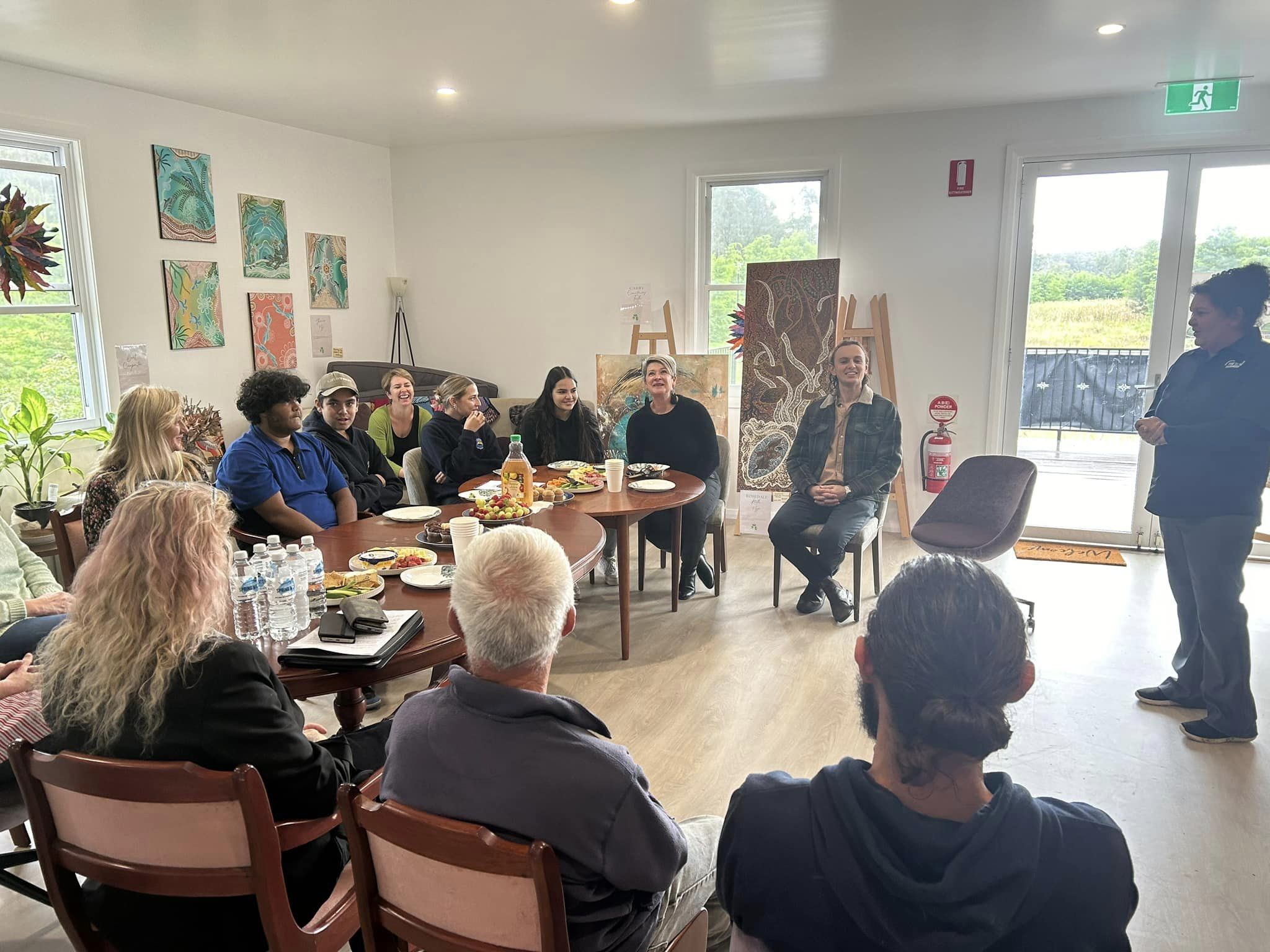
“We wanted to hear from the people in our community who are often overlooked,” continues Kizzy, “and our engagement and cultural safety strategies were key to enabling their participation in workshops and meetings, particularly for Aboriginal participants.”
From 2023 to 2025 the Eurobodalla team delivered five community funding rounds, disbursing $2.75 million to 101 local resilience projects across the Eurobodalla Shire, from South Durras to Wallaga Lake.
Eurobodalla Fire to Flourish Indigenous Facilitator, Barb Rix, says it was important to be open-minded to community needs and aspirations.
“Keeping our grant criteria open enabled community to decide what resilience meant to them,” she says.
“If community thinks it fits the criteria, then it does.”
.jpg)
The funded projects are diverse, supporting a range of community needs, including cultural healing, emergency preparedness, mental health and wellbeing support, governance training, music and arts festivals, sport and leisure, and community assets like portable trailers for solar power and group catering.
.jpg)
“Nobody knows our community like the people who live here,” says Eurobodalla Project Lead Sallyann Burtenshaw. “Fire to Flourish has listened to that and because of that we have such a diverse range of projects.”
Across the four Fire to Flourish communities, which also include Tenterfield and Clarence Valley in NSW, and East Gippsland in Victoria, more than ten million dollars has been awarded to community projects through participatory grantmaking.
“Our program has shown that community being the decision-makers is not only possible,” continues Kizzy, “it has a transformative impact.”
PRF Chief Alliances Officer Liz Yeo says Fire to Flourish demonstrates the power of putting community in the driver’s seat.
“We cannot underestimate the power of communities coming together, with strong local leadership, to make collective decisions about what will enable their community to thrive. Fire to Flourish enabled communities that had experienced the most extreme challenges to strengthen their connections, their sense of agency, and their ability to face future challenges together.”
Lessons learned
Fire to Flourish CEO Briony Rogers says a core aim of Fire to Flourish is to pilot a new model of holistic support for inclusive, community-led approaches to building disaster resilience.
“As the program has emerged,” she says, “it’s been important to understand and document what works to codify the model, methods and tools.
“Implementing a community-led disaster resilience program is not straightforward. All communities are unique, with their own strengths and challenges, but what we’ve learned from the experiences of the Fire to Flourish communities across four local government areas shows us there are common insights that are useful in a broader context.”
The Fire to Flourish team is consolidating evidence, insights and practical guidance in a range of accessible outputs for community, government, industry and academia. For example, lessons learned in the activation phases of the program were distilled and captured in Fire to Flourish: Lessons Learned in its Activation. Briony and her fellow Fire to Flourish authors reviewed experiences across program establishment, community relationship development, co-design of local implementation, and preparation for scaling and systems change, to draw out five key insights:
- Invest in a Year Zero
- Lasting change needs long-term funding
- Move at the pace of trust
- Community customisation is key
- Resource for community self-determination
The intention is that these lessons will inspire, support and guide other organisations to work in deep partnership with communities.
“Building community resilience isn’t about siloed solutions — it’s about shifting the system so that communities are valued and directly resourced to drive local action. Fire to Flourish has shown that when we centre community leadership and invest in the conditions for connection and collaboration, we unlock lasting, transformative change,” says Briony.