

INVEST: Investment Dialogue for Australia’s Children

Investing in collaboration with others

Read the case study

INVEST: Australian Spatial Analytics

Investing in unique talent

Read the case study

INVEST: First Australians Capital

Investing in self-determination

Read the case study

BUILD: Pay What it Takes

Building tools and coalitions to break the NFP ‘starvation cycle’

Read the case study

BUILD: Domestic and family violence portfolio

Building our understanding of domestic and family violence in Australia

Read the case study

BUILD: Gujaga Foundation

Building capacity for language revitalisation

Watch the video

INFLUENCE: Justice Reform Initiative

Influencing the conversation about justice

Read the case study

INFLUENCE: Welcome to Blacktown

Elevating community voices

Read the case study

INFLUENCE: TARGET ZER0

Influencing overrepresentation of mutlicultural young people in the justice system

Read the case study

INVEST: Investment Dialogue for Australia’s Children

Investing in collaboration with others


It’s not possible for any one organisation or government to create positive, intergenerational change on their own. For PRF, working alongside peers, partners, and together with government on initiatives such at the Investment Dialogue for Australia’s Children, is necessary to ensure a future where people and places have what they need to thrive.

The Investment Dialogue for Australia’s Children is a 10-year collaboration between government and philanthropy to improve the wellbeing of children, young people, and their families, by working with communities to make long-term, intergenerational change.

The first Investment Dialogue roundtable in December 2023 signalled a new way of working, and saw the Australian Government meet with 20 Australian philanthropies, including PRF, to sign the Working Together Agreement. It supports a more aligned and targeted approach by coordinating investments from philanthropy and government, while working with communities and existing organisations on a range of projects and systems reforms that place children and young people at the centre.

The Investment Dialogue is a unique opportunity to make a real difference with innovation across sectors, and in partnership with communities. At the time of the roundtable Treasurer the Hon. Dr Jim Chalmers MP said, “Aligning government efforts with the substantial investments of the philanthropic community is crucial if we’re going to make progress on addressing disadvantage.”

Since the initial meeting, First Nations and Community Leadership Councils have been established as guiding and advisory bodies. The Leadership Councils help to amplify the voices and perspectives of First Nations peoples and community members, creating a platform for meaningful contributions that ensure the Investment Dialogue considers the nuanced needs of communities.

In November this year, the Dialogue met for the second time, and together committed to a range of outcomes, including collaborating with up to 50 communities by 2030, to better support community-led change that achieves tangible outcomes for children, young people and their families. The Dialogue will coordinate philanthropic and government engagement with the communities, involve local leaders in decision-making and allocate funding according to community aspirations, helping to reduce the burden of seeking support and investment.

This collaboration will include partnering with three place-based community partners to co-design innovation zones. These zones will provide an opportunity for established place-based approaches to design the enabling reforms needed to break through major barriers for achieving intergenerational change.

Philanthropy also announced more than $47 million in co-investments in organisations working within the Dialogue’s priority outcome areas, such as the Cornelia Program, that provides pregnant women who are experiencing homelessness or insecure housing with a pathway to safe housing, social and community supports, and individualised health care.

“We are only at the start of what’s possible with the Investment Dialogue,” said Head of Children Hannah Barber. “PRF has so far committed more than $38 million to Investment Dialogue initiatives that will support children, families and communities have what they need to thrive. The return on that investment can only be greater if we listen to the needs of communities, from the voices in communities, and work in partnership with others to respond.”

Read the case study

INVEST: Australian Spatial Analytics

Investing in unique talent

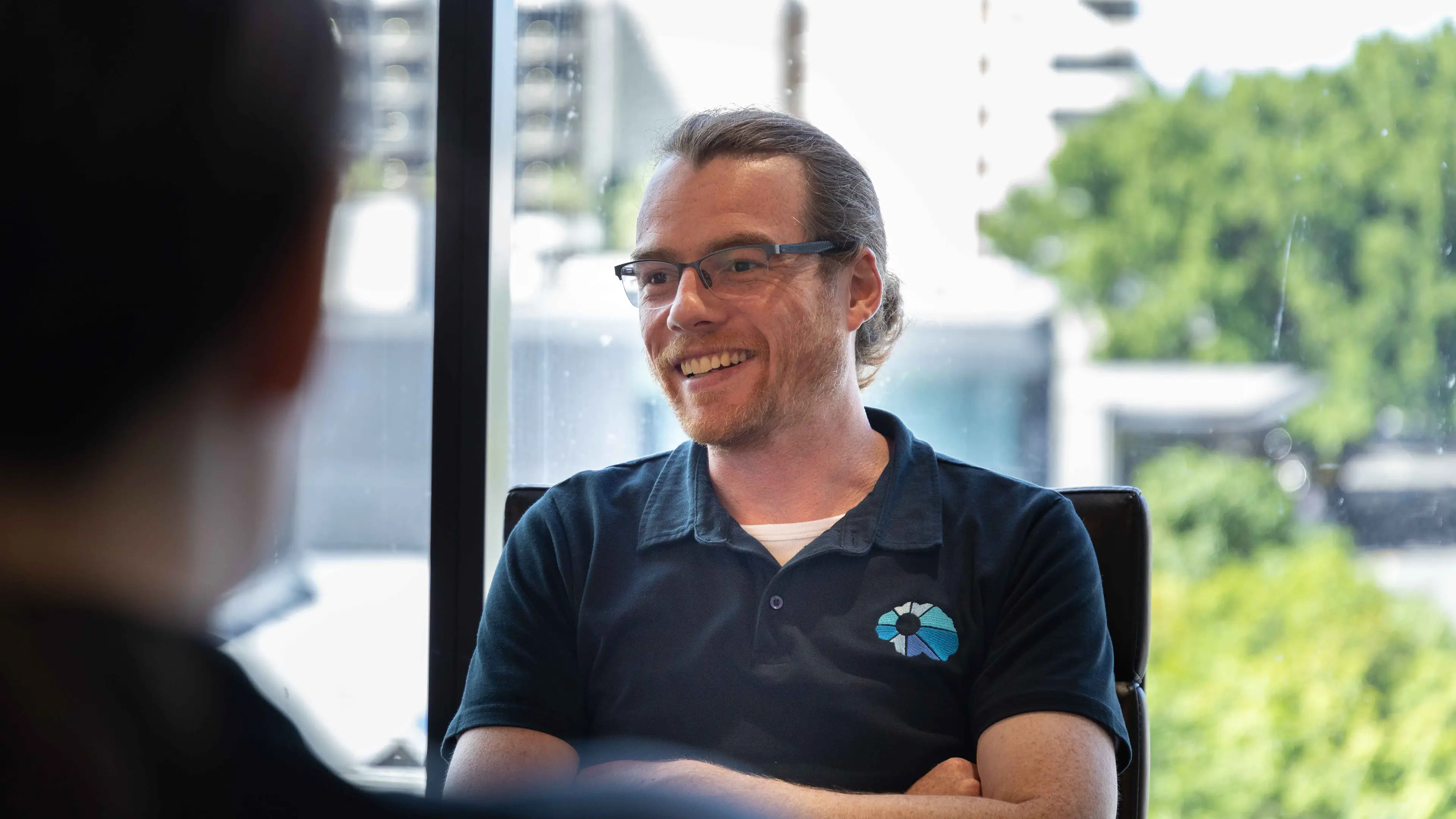
Before Blake Morrison found employment with Australian Spatial Analytics (ASA), he struggled to find supportive and long-term work. After gaining invaluable geospatial skills from ASA’s on-the-job training, ASA helped him transition his employment to a multi-year contract at the University of New England’s Applied Agricultural Remote Sensing Centre as a Spatial Analyst.

“When I was at ASA, I loved the variety of work, and applying my brainpower and having it potentially benefit ASA and client projects,” says Blake. “I felt freed from the shame cycle of Centrelink and feel like ASA has allowed me to maintain and enhance my job prospects.”

There are more than 100 young neurodivergent adults employed by ASA, one of Australia’s largest and fastest-growing work-integrated social enterprises which provides career pathways in the geospatial and engineering professions – industries with critical skills shortages. Team members use their unique cognitive talents, such as attention to detail, pattern recognition and memory retention, to deliver professional ‘big data’ services for multiple industries and all levels of government. ASA’s aim is to be a career starting point for young neurodivergent adults so that they can eventually transition their employment to other inclusive organisations.

In mid-2023, PRF invested $5 million in ASA through a blended finance arrangement – half the funds as a grant, and half as an impact investment – for the social enterprise to scale its operations and provide more employment opportunities for young neurodivergent people, who face an unemployment rate of 34 per cent – 10 times the national average.

More than one year on, ASA CEO Geoff Smith says the finance has helped the organisation to increase its impact.

“This blended finance partnership was monumental for ASA,” he says. “It shows that with some tailored support, social enterprises like ASA can mature past the grant cycle and create systemic impact over the long term. The capital has allowed ASA to scale its impact across Australia and facilitated the employment of 40 new young autistic and neurodiverse adults in the first year.”

PRF Chief Impact Officer, Ben Gales says that investing PRF’s resources in innovative ways can help unlock sustained impact across the sector.

“We know that many for-purpose organisations are keen to become more sustainable and less reliant on grants but can struggle to access traditional finance. PRF’s blended finance investment in ASA, in which the grant component funds the social impact (employment support for young neurodivergent people) and patient capital for expanding its commercial operations – has given ASA the capacity and freedom to scale, and provide employment and support to young neurodivergent people for the long-term.”

Geoff Smith was named the 2025 Queensland Australian of the Year, and in the next year, ASA anticipates it will support more than 50 people into new and sustainable employment.

Read the case study

INVEST: First Australians Capital

Investing in self determination


According to Supply Nation, for every dollar of revenue, Indigenous businesses create $4.41 of economic and social value, yet many First Nations entrepreneurs face barriers to accessing the appropriate capital needed to start and scale their businesses. Access to commercial lending can be challenging for First Nations businesses due to low intergenerational wealth transfer, lower rates of home ownership, and difficulty satisfying commercial lending criteria.

PRF partner First Australians Capital (FAC), an Indigenous-led organisation providing capacity building services and access to capital for Indigenous businesses, is trying to address these barriers. FAC is focused on economic independence and self-determination for First Nations entrepreneurs, helping to address racial inequity in Australia’s finance sector.

PRF first supported FAC in 2020 with a small impact investment in a pilot fund, and since then has provided a range of support including $10 million in grant funding, non-financial technical assistance, and more than $5 million repayable finance to FAC’s Catalytic Impact Fund, which connects investment markets with the Indigenous economy, offering accessible, patient debt finance to support Indigenous businesses.

Ben Smith, PRF’s Head of Impact Investing, says PRF’s support of FAC is part of a larger effort to invest in community-led funds, a strategic focus for PRF’s impact investing team since 2023.

“We believe that those with lived experience of societal and environmental challenges are best placed to disburse capital to the communities they serve.

“By enabling communities to hold their own capital, power dynamics can be redressed, and funds can flow to those who can create the greatest impact.”

The Catalytic Impact Fund, which launched earlier this year, has already issued $8 million in funding to Indigenous-led businesses, enabling entrepreneurs the opportunity to thrive and contribute to larger scale economic development. In the two years since FAC started raising funds for what would eventually become the Catalytic Impact Fund, more than 200 businesses were supported creating more than 1,800 economic participants through employment, business ownership and supply chain enabling within the Indigenous economy.

Ben says that by seeding and supporting community-led funds owned and driven by those with deep sector knowledge and lived experience, PRF can help “increase the market of sustainable impact funds and attract capital from new and diverse sources.”

The Chair of FAC’s Board, Jocelyn King, says that PRF’s support has empowered the organisation to decide how to approach its strategy to better support First Nations businesses and entrepreneurs and create more opportunities for Indigenous peoples.

“PRF’s commitment to FAC is allowing us to unlock innovation and self-determination for hundreds of Indigenous businesses and founders,” she says.

“FAC is building a community of investors and investees premised on overcoming systemic barriers to finance, driving a new economy and building economic independence for Indigenous people and communities.

“Big social change occurs when we all work together.”

Read the case study

BUILD: Pay What it Takes

Building tools and coalitions to break the NFP ‘starvation cycle’


When it comes to funding the work of not for profits, there's a critical yet often overlooked aspect: indirect costs. These ‘invisible’ expenses—ranging from IT and marketing to staff training—are essential for delivering impactful programs and enduring outcomes. And yet, they often go underfunded, leaving NFPs struggling to effectively achieve their purpose.

2022 research by Social Ventures Australia and Centre for Social Impact, ‘Paying what it takes: funding indirect costs to create long-term impact’ (PWIT Research), revealed that NFPs in Australia experience chronic underfunding of indirect costs, perpetually receiving less funding than what is required to deliver programs. There has also been a perception from funders, donors, and charities themselves, that lower overheads are markers of an efficient and effective organisation. All of this leads to lower capability and effectiveness across the sector, and a ‘starvation cycle’ where NFPs underinvest in their core operational and infrastructure needs to keep overheads low.

The Pay What It Takes (PWIT) initiative in Australia is a growing response to this research and comprises individuals, philanthropic funders and for-purpose organisations committed to understanding what it actually takes to create impact and paying for it. It aims to ensure that for-purpose partners have access to the resources, connections and support required to create impact now, and over the long term.

Inspired by the PWIT Research, in addition to implementing its own PWIT policy, PRF has been supporting a diverse team of experts to co-design PWIT principles and guidelines to translate the research into action. The team of experts soft-launched the suite of tools, which reflect the knowledge, experience and perspectives of diverse actors across the for-purpose sector, at the 2024 Philanthropy Australia Conference. Complementing this work, PRF also supported the ‘Reframe Overheads’ campaign, led by a committed group of NFP fundraisers who are supporting NFPs to apply PWIT insights with practical guides on reframing the narrative about indirect costs to communicate better about overheads with boards and funders.  

Collaboration between these two groups, stewarded by PRF, has strengthened the work, enabling stronger sector alignment. The full set of tools, principles and guidelines will be launched early in 2025.

“Studies have shown no correlation between overhead ratio and cost-effectiveness,” says Jo Taylor, previous Chair of the PWIT Steering Committee.

“Indeed, there is clear evidence that insufficient spending on indirect costs can potentially reduce overall effectiveness.

“Our goal is to encourage a shift in mindset - to ignite conversations about how to ensure that the organisations we fund really do have a solid base from which they can contribute to change, and how we can plug some of those gaps that exist because of the way that funding is distributed, and the way organisations are viewed and judged.”

PRF’s Chief Alliances Officer Liz Yeo has firsthand experience managing a charitable organisation and understands the pressure from funders to underestimate indirect costs and continually do more with less.

“We need to stop praising charities for their ability to deliver impact on the smell of an oily rag,” says Liz, “and instead properly fund them to do the complex and innovative work required to create long-term social change.”

Read the case study

BUILD: Domestic and family violence portfolio

Building our understanding of domestic and family violence in Australia


Since 2020, PRF has granted approximately $23 million directly into work to address domestic and family violence (DFV) in Australia and published six stand-alone reports. PRF’s engagement with the DFV sector has been deliberate, prioritising depth of understanding over speed. This has enabled us to build connections in the sector, build evidence about the realities confronting frontline services, as well as build internal understanding and knowledge about the DFV landscape in Australia.

“As newcomers to funding this sector, we were mindful not to rush, nor ignore the work and advocacy done by many players over many years to keep Australian families free from harm,” says PRF Head of Families Jackie Ruddock, who has led PRF’s DFV work for the past five years. “There has been a groundswell of recognition of DFV in Australia but the existing, collective response has not lessened its prevalence and impact, and services do not have the resources to meet increased demand.”  

PRF began its work in DFV against the backdrop of the COVID-19 pandemic, providing relief to 70 women’s shelters with almost $3 million in funding. We took an action learning approach to understand the specialist needs of the sector and heard that short term, program-based government funding does not match the complex nature of the work, nor enable organisations to undertake early intervention and prevention.

Building on these lessons, PRF held an open grant round for specialist DFV services in 2023, awarding $13.6 million to 58 organisations (including $6.3 million to First Nations community-controlled organisations), again bringing the grant recipients together for collective learning.

“Early research showed that knowledge and practice in the sector remains trapped in a locality as mechanisms for sharing aren’t obvious or available,” continues Jackie, “so we were keen to create a network of our partners to share insights and learnings, build relationships, and inform PRF’s future work to help tackle DFV in Australia.”

Evidence gathered by ResearchCrowd from the network of community-controlled organisations, highlights the need to understand what family violence looks like for First Nations people from a First Nations perspective, and to foreground self-determination in the unique response required to address DFV in First Nations communities. Acknowledging the importance of backing First Nations-led approaches will continue to be a priority in PRF’s future investment in the DFV space.

“It has also become clear from other specialist services that early intervention with children, young people and the whole family represents huge promise in terms of supporting healing and breaking intergenerational cycles of violence,” says Jackie.

She says the pattern of funding, followed by considered learning has been critical to planning PRF’s future investment.

“We’ve used what we’ve learned from research and conversations with people in the DFV field to find critical intervention points that, for whatever reason, have traditionally received less focus and funding. It’s about using our investment in a way that we can start to shift the conditions that trap people in cycles of violence, so that all families are stable.”

Read the case study

BUILD: Gujaga Foundation

Watch the video

INFLUENCE: Justice Reform Initiative

Influencing the conversation about justice


Building relationships, influencing conversations, and shifting narratives. It’s not what most would think of as the first line of defence against a failing justice system, but for PRF partner Justice Reform Initiative (JRI), an advocacy organisation working to reduce the number of people in Australian prisons, these three elements are key to building a sustained shift in public political narratives away from 'tough on crime' approaches and towards evidence-based justice policy.

“We know that jailing is failing,” says JRI Executive Director Dr Mindy Sotiri, “and that the over-use of incarceration causes enormous harm, is ineffective at addressing the drivers of crime, and is a misuse of taxpayer dollars.

“Too many people are ‘managed’ in prison settings, instead of having access to critical resources, supports and care in the community.  For example, without appropriate housing, healthcare and job opportunities there is a much higher chance people will come into contact with the justice system. The majority of people entering prison have experienced multiple and intersecting disadvantage, and prisons operate to exacerbate and entrench this disadvantage.”

Prisons cost the Australian economy $6.3 billion annually, yet the evidence shows that prison does little to address the drivers of incarceration or reduce crime, and in fact increases the likelihood of a person reoffending. Regardless of historically low crime rates in most of the major offence categories, almost all Australian jurisdictions are investing in new prisons or prison infrastructure.

In 2024 the Northern Territory and Queensland elections were fought on political commitments to reduce crime, and despite the evidence that imprisonment has no significant impact on crime rates, prison is still centred as the main response.

Together with an alliance of people who share long-standing professional experience, lived experience and/or expert knowledge of the justice system, JRI has been focused on building relationships, engendering commitments to move away from law-and-order politics and policy making and towards cross-party evidence-based approaches to justice.

In 2020 PRF provided $500K seed funding to establish JRI, and in 2021 provided $3.2 million to enable JRI to advocate key reforms to state criminal justice systems. In the three years since, JRI has built a reputation as a trusted voice on justice system reforms, publishing 23 reports and discussion papers, and attracted significant media engagement to bring evidence more sharply into the conversation about justice.

“Influencing conversations and shifting narratives takes time,” says PRF Head of Community Wellbeing & Justice Dominique Bigras, “but by working collaboratively with other advocates in this space, JRI has been able to help raise awareness of the failures of our prison system and start to build the case for prison reform and support for investment in community-led prevention.”

In October this year PRF granted JRI a further $6.8 million over five years to drive a national public facing advocacy campaign to highlight the failure of incarceration and mobilise communities and parliaments around Australia to shift from a political and policy preference for imprisonment to more effective and economically sustainable justice approaches.

Read the case study

INFLUENCE: Welcome to Blacktown

Elevating community voices


Blacktown lies 34 kilometres northwest of the Sydney CBD on the traditional lands of the Darug people. With nearly 400,000 residents, Blacktown is the most populous LGA in NSW, and the fourth largest in the country. By 2036, its population is expected to exceed that of Tasmania and annual regional economic activity is forecast to exceed $26 billion.

Blacktown is also one of the most culturally diverse areas in the country with half the people in the LGA born overseas and residents hailing from 76 countries.  

When investing in communities, the evidence shows that better outcomes are achieved when the voices of those affected are heard. With so many diverse voices in the community, how do you paint a picture of the challenges and opportunities that exist within a place?

Over six months in 2022 and 2023, UTS Impact Studios, supported by PRF, conducted almost 100 interviews with people connected to Blacktown, exploring and investigating the question of how communities thrive. The project sought to learn about Blacktown’s many and varied communities, together with the innovative and inspired social change work that is happening there.

The result is Welcome to Blacktown, a place-based audio project that launched in September this year.

The Impact Studios team listened to people tell stories of their lives, on their own terms: their families, their passions, their work and what motivates them to do it, their challenges and achievements. From this process, two audio works were created: We are Blacktown and Sink or Swim.

“We are proud to showcase place-based audio storytelling,” says UTS Interim Pro Vice Chancellor, Social Justice and Inclusion Amy Persson, “as a way to listen to, document and make accessible individual and community stories as critical evidence that can guide place-based approaches to policy and social change.”

Welcome to Blacktown Executive Producer Olivia Rosenman says, “In being listened to, and heard, this project enhances community belonging, empowers active citizenship and connects Blacktown’s residents to a shared story, supporting the way they imagine and enact a thriving future.”

PRF Chief Alliances Officer Liz Yeo says, “It’s so important to listen to and capture voices on the ground, to hear first-hand about the experiences of residents – what they love about the area and the challenges of living there.

“The range of stories elevate community voices and provide a wonderful exploration into some of the more surprising elements of living in a community, elements which might otherwise go unnoticed.”

The audio project is part of a greater investment in the Blacktown area. In October this year, PRF opened expressions of interest for grants to support community networks working in Mt Druitt, in the Blacktown LGA.

“We believe that strong community networks are necessary for places to imagine and lead their own futures,” continues Liz, “and this funding opportunity will help organisations already doing good work together in Mt Druitt to be better connected and resourced for their work.”

Read the case study

INFLUENCE: TARGET ZER0

Maw lives with his mum and eight siblings in the Western suburbs of Melbourne. He says that growing up he always loved basketball because it gave him a sense of peace.

“It took my mind off a lot of things,” says Maw. “The things I was going through at home, the things I was going through at school.

“I just wanted to play. But not everything could be paid for.”

When Maw was 14 his family had to move house, and the family couldn’t find a school in their new area that would accept his enrolment. So, he stopped going.

“As a young person, when you don’t have school or anything to do during the week - you start doing different things to kill time and make money,” he says.

“I was young, I couldn’t work. I started hanging out with the wrong crowd. Started stealing from shops, then it went to stealing cars.”

Eventually, Maw spent just over two years in youth detention.

Anoushka Jeronimus from community legal centre WEstjustice says stories like Maw’s are not uncommon.

"Crime prevention is not just the job of criminal justice system and not just the job of the young person and their family," she says.

"It requires the whole of the community. TARGET ZER0 provides us with the opportunity to do just that: bring the whole of the community together in Melton, Brimbank and Wyndham."

In 2022, WEstjustice was awarded $500,000 seed funding from PRF to establish TARGET ZER0, together with Centre for Multicultural Youth. TARGET ZER0 is a ten-year justice reinvestment plan working towards ending both the overrepresentation and criminalisation of young people in the western suburbs of Melbourne. The initiative takes a collective impact approach, bringing together a coalition of stakeholders to address the common overlapping systemic and structural factors that can cause young people to have contact with the justice system, such as access to education, health services, employment, and housing.

"TARGET ZER0 is not only bringing together the whole community around its twin goals but critically, enabling a shared focus on their root causes across multiple systems to help young people like Maw and his family thrive in our community."

Earlier this year, PRF provided an additional $7.45 million to scale TARGET ZER0, and PRF Head of Community Wellbeing & Justice Dominique Bigras says the investment in this targeted approach will help divert young people from the justice system.

“When young people don’t have access to what they need to thrive, their risk of contact with the justice system increases,” she says. “TARGET ZER0 will help better coordinate and target services so young people don’t fall through the gaps.”

Maw says by having the right support he’s been able to develop a routine, begin working towards something, and has become a totally different man.

“When you get out of detention, especially for a young person, if they have no one around to support them, they're just going to go back to the same stuff,” says Maw.

“I was able to get that support from a lot of people. And that really helped me turn my life around.”

Read the case study

Annual Review 2024

Read the Review

About Paul Ramsay Foundation

PRF is a philanthropic foundation.

The late Paul Ramsay AO established the Foundation in his name in 2006 and, after his death in 2014, left most of his estate to continue his philanthropy for generations to come.

At PRF, we work for a future where people and places have what they need to thrive.

With organisations and communities, we invest in, build, and influence the conditions needed to stop disadvantage in Australia.

About Paul Ramsay Foundation

About Paul Ramsay Foundation

PRF is a philanthropic foundation.

The late Paul Ramsay AO established the Foundation in his name in 2006 and, after his death in 2014, left most of his estate to continue his philanthropy for generations to come.

At PRF, we work for a future where people and places have what they need to thrive.

With organisations and communities, we invest in, build, and influence the conditions needed to stop disadvantage in Australia.

About Paul Ramsay Foundation

A

B

C

D

E

F

G

H

I

J

K

L

M

N

O

P

Q

R

S

T

U

V

W

X

Y

Z

About Paul Ramsay Foundation

About Paul Ramsay Foundation

Numbers at

a glance

Numbers at

a glance

Numbers at

a glance

Numbers at

a glance

A

B

C

D

E

F

G

H

I

J

K

L

M

N

O

P

Q

R

S

T

U

V

W

X

Y

Z

Numbers at

a glance
Numbers at

a glance

Message from the CEO

Welcome to our 2024 Annual Review.

The defining moments of our work at PRF are about coming together with community members, partners, peers, governments and other stakeholders to create better outcomes for kids, families and communities.  The way we do this changed as we launched our new strategy in May 2024.


We spent a year asking and listening to dozens of for-purpose leaders around Australia, the PRF team and Board, to think about how we can best use our resources for an Australia where people and places have what they need to thrive.

The resulting strategy guides PRF’s approach to grant-making and partnerships, and how we work alongside organisations and communities to invest in, build, and influence the conditions needed to stop disadvantage in Australia. This is the complex territory of applying a systems approach with the aim of long-term, generational change.


Our focus on working deeply in place is an example of our new strategy in action. For example, First Nations Economic Development in Central Australia is focussed on creating self-determined, quality job opportunities for young people in remote communities, by listening to and amplifying the voices of First Nations people in designing employment support. We have also launched our first place-based open grant round in Mt Druitt, Western Sydney; as well as a podcast to elevate the voices of the Blacktown community. Since July 2024, in line with our focus on communities and place-based action, local funding has increased from 12% to 24% of distributions.  


As we continue to develop our place-based philanthropic practice, we know we must remain close to the communities that we work alongside and listen deeply to many diverse voices to understand opportunities, challenges, and the community’s vision of the future. As we build our internal capability and the external relationships to do this work, we gather momentum, and excitement, about the long-term change that is possible here and across Australia.

The launch of the new strategy was an important time to refresh PRF’s brand to better reflect the vibrant communities with whom we work.

We have also added a First Nations sub-brand, based on an a beautiful, commissioned painting by Gumbaynggirr / Bundjalung artist Otis Hope Carey. It symbolises our commitment to support the self-determination of First Nations communities. This commitment is reflected in our giving.


We increased our funding to First Nations beneficiaries from 1% of PRF’s total distribution in 2018 to 46% in 2024. Similarly, we increased our funding to First-Nations-led organisations from <1% in 2018 to 35% in 2024. We continue to listen to the voices of First Nations people and support communities to have a greater say in the issues and decisions that affect them.


This year we’ve deepened our collaboration between peer philanthropy, government and community. This has been especially demonstrated by progress in the Investment Dialogue for Australia’s Children. We turned dialogue into action through co-investment in many initiatives, including PLACE (a new national centre for place-based work). Many thanks to our partners, peers, governments and other stakeholders who allow us to work alongside them for a brighter future.


Finally, this year has been marked by ongoing commitments to social procurement, responsible investing, learning and evolution, and Yirranma Place as a buzzing precinct for purpose.


I am proud of the strength of our diverse and talented team, the rigour, responsibility and joy we bring to our work and what we have achieved together. Special thanks to our Chair, Michael Traill, our full Board, and First Nations Advisory Council, who are engaged, committed, focused on purpose, and great partners to work with. As we look towards 2025 our focus will remain on embedding our strategy, sharing our learning along the way, and working alongside people and organisations who are creating the conditions for people and communities to thrive.


Professor Kristy Muir
CEO Paul Ramsay Foundation

Message from the CEO

Message from the CEO

Welcome to our 2024 Annual Review.

The defining moments of our work at PRF are about coming together with community members, partners, peers, governments and other stakeholders to create better outcomes for kids, families and communities.  The way we do this changed as we launched our new strategy in May 2024.


We spent a year asking and listening to dozens of for-purpose leaders around Australia, the PRF team and Board, to think about how we can best use our resources for an Australia where people and places have what they need to thrive.

The resulting strategy guides PRF’s approach to grant-making and partnerships, and how we work alongside organisations and communities to invest in, build, and influence the conditions needed to stop disadvantage in Australia. This is the complex territory of applying a systems approach with the aim of long-term, generational change.


Our focus on working deeply in place is an example of our new strategy in action. For example, First Nations Economic Development in Central Australia is focussed on creating self-determined, quality job opportunities for young people in remote communities, by listening to and amplifying the voices of First Nations people in designing employment support. We have also launched our first place-based open grant round in Mt Druitt, Western Sydney; as well as a podcast to elevate the voices of the Blacktown community. Since July 2024, in line with our focus on communities and place-based action, local funding has increased from 12% to 24% of distributions.  


As we continue to develop our place-based philanthropic practice, we know we must remain close to the communities that we work alongside and listen deeply to many diverse voices to understand opportunities, challenges, and the community’s vision of the future. As we build our internal capability and the external relationships to do this work, we gather momentum, and excitement, about the long-term change that is possible here and across Australia.

The launch of the new strategy was an important time to refresh PRF’s brand to better reflect the vibrant communities with whom we work.

Message from the CEO

A

B

C

D

E

F

G

H

I

J

K

L

M

N

O

P

Q

R

S

T

U

V

W

X

Y

Z

Message from the CEO

Message from the CEO

Message from the Chair

At the tenth anniversary of Paul Ramsay's passing, we can reflect on the progress of the Foundation that continues his legacy.

As the founder of one of the country’s most successful and entrepreneurial businesses, Ramsay Health Care, Paul’s capacity for backing innovation and people was central. Remembered fondly for the warmth of his personality and his engagement with people generally – whatever their background – the Foundation’s focus of making a difference in communities is very much in his spirit.

The numbers tell a story of the significance of Paul Ramsay’s generosity.  Since the formation of the Foundation in 2016, by the end of FY24 we had granted more than $1.15 billion to 356 organisations.  In FY24, 153 grants totalling $149.9 million were committed with an additional $11.5 million in impact investments.

Of deeper importance than the numbers, a focus on strategic renewal grounded in what communities with a disproportionate burden of exclusion and disadvantage need to thrive, has been a guiding anchor in PRF’s work. The overwhelmingly positive feedback from a wide variety of stakeholders on the communication and early execution of the strategy is encouraging.  We also recognise the need for continuing candour and transparency about the programs and grants that haven’t worked in the way we and our partners might have liked.  The spirit of shared learning and collaboration permeates what Kristy Muir and the team are bringing to the sector.

It is exemplified in the Investment Dialogue for Australia’s Children, a long-term partnership between government, philanthropy, and communities, which is reimagining our respective roles in creating the kind of systemic change needed for people and places to thrive. This new way of working with, and investing in, communities is deliberately different, foregrounding local solutions to community challenges and better implementing what we know works.

Another important highlight of the year was the development of an integrated total impact approach to investing.  It reflects PRF’s commitment to a strategy aligned across the spectrum of how we support mission aligned impact investment at different scales, through to a practical, ethical approach to Environmental, Social, and Governance (ESG) risks reflected in the responsible investing charter adopted for management of the Foundation’s corpus.

We farewell Board Director Rob McLean this year, whose contribution, cut-through and insight has been a critical and guiding light. Rob’s role as foundational Chair of the Grants Committee has been instrumental in creating the kind of engagement and debate that speaks to the healthy board/team relationship so important to our work and decision making.

Finally, I want to acknowledge the continuing energy and passion of Kristy, the senior leadership, and the PRF team.  We know we have a leadership team that care deeply about making a difference and have the capacity to both engage deeply in the communities we support and push the boundaries of system and policy change where we can.  Holding those two things in balance is vital to the impact we want to have.

Michael Traill AM

Chair Paul Ramsay Foundation

Message from the Chair

Message from the Chair

At the tenth anniversary of Paul Ramsay's passing, we can reflect on the progress of the Foundation that continues his legacy.

As the founder of one of the country’s most successful and entrepreneurial businesses, Ramsay Health Care, Paul’s capacity for backing innovation and people was central. Remembered fondly for the warmth of his personality and his engagement with people generally – whatever their background – the Foundation’s focus of making a difference in communities is very much in his spirit.

The numbers tell a story of the significance of Paul Ramsay’s generosity.  Since the formation of the Foundation in 2016, by the end of FY24 we had granted more than $1.15 billion to 356 organisations.  In FY24, 153 grants totalling $149.9 million were committed with an additional $11.5 million in impact investments.

Of deeper importance than the numbers, a focus on strategic renewal grounded in what communities with a disproportionate burden of exclusion and disadvantage need to thrive, has been a guiding anchor in PRF’s work. The overwhelmingly positive feedback from a wide variety of stakeholders on the communication and early execution of the strategy is encouraging.  We also recognise the need for continuing candour and transparency about the programs and grants that haven’t worked in the way we and our partners might have liked.  The spirit of shared learning and collaboration permeates what Kristy Muir and the team are bringing to the sector.

Message from the Chair

A

B

C

D

E

F

G

H

I

J

K

L

M

N

O

P

Q

R

S

T

U

V

W

X

Y

Z

Message from the Chair

Message from the Chair

Our strategy

In 2023, we launched several strategies aimed at expanding our market reach. This included entering new geographical markets and diversifying our product offerings. Strategic Moves:

  1. Launched products in three new countries.
  2. Developed partnerships with local distributors.
  3. Increased marketing efforts in digital channels.

These strategies have resulted in a 20% increase in market share, positioning us as a leader in our industry.

Our strategy

Our strategy

In 2023, we launched several strategies aimed at expanding our market reach. This included entering new geographical markets and diversifying our product offerings. Strategic Moves:

  1. Launched products in three new countries.
  2. Developed partnerships with local distributors.
  3. Increased marketing efforts in digital channels.

These strategies have resulted in a 20% increase in market share, positioning us as a leader in our industry.

Our strategy

A

B

C

D

E

F

G

H

I

J

K

L

M

N

O

P

Q

R

S

T

U

V

W

X

Y

Z

Our strategy

Our strategy

This is a list of organisations that received a commitment of funding in the form of a grant, donation or program related investment in FY24.

Our partners

in 2024

This is a list of organisations that received a commitment of funding in the form of a grant, donation or program related investment in FY24.

Our partners

in 2024

This is a list of organisations that received a commitment of funding in the form of a grant, donation or program related investment in FY24.

Our partners

in 2024

This is a list of organisations that received a commitment of funding in the form of a grant, donation or program related investment in FY24.

Our partners

in 2024

A

B

C

D

E

F

G

H

I

J

K

L

M

N

O

P

Q

R

S

T

U

V

W

X

Y

Z

This is a list of organisations that received a commitment of funding in the form of a grant, donation or program related investment in FY24.

Our partners

in 2024

This is a list of organisations that received a commitment of funding in the form of a grant, donation or program related investment in FY24.

Our partners

in 2024

Case Studies

Case Studies

Case Studies

Case Studies

A

B

C

D

E

F

G

H

I

J

K

L

M

N

O

P

Q

R

S

T

U

V

W

X

Y

Z

Case Studies

Case Studies

Measuring our impact:


What we’ve

learned

to date

PRF’s approach to learning and evaluation has evolved over time in alignment with our strategic focus. As PRF has matured, so too have the methods we use to learn from our work. By reflecting on these shifts, we continuously improve how we measure the impact of our grants and partnerships.

Phase 1: Learning without an explicit focus on evaluation

In the early years, there was not a PRF-wide systematic approach to evaluation and learning. During this period there was significant emphasis on collaboration with partners. Co-creating solutions with those working on the ground provided deep insights into the challenges and opportunities within our focus areas. This collaborative approach laid the groundwork for initiatives such as facilitating communities of practice, as well as the Foundation’s approach to evaluation.

Phase 2: Improving the quality of evidence

As PRF matured, we shifted our focus towards a more consistent approach to generating evidence. There was greater focus on “attribution” and ensuring that we could confidently link outcomes to specific activities. For example, an evaluation of the Quality Teaching Rounds (QTR) program provided high-quality evidence of impact and offered valuable insights into what worked well across various contexts. While the evidence showed that the effects of QTR are slightly greater in schools with higher levels of socioeconomic disadvantage, its adoption has been more prevalent in middle-income schools, which reflects the distribution of Australian schools overall. To ensure that the program also benefits students facing the greatest challenges, PRF's next phase of support for QTR focuses on enhancing its accessibility and impact in schools with higher levels of socioeconomic disadvantage.

Phase 3: Systemic approaches and the focus on contribution

In our current phase, PRF is shifting its attention from individual initiatives to systemic change. We understand that lasting transformation comes from engaging with the complexity of the systems in which we operate. Rather than focusing solely on attributing specific outcomes to particular grants, we now emphasise the collective contribution across our portfolios. One example of this is our Justice Reinvestment package, where we support measurement, evaluation and learning staff on more than half a dozen partnerships. In parallel, we are working with researchers and NSW communities to measure impact on the variables that matter to community members. We also convene a monthly Justice Reinvestment Community of Practice where partners share ideas, learnings, challenges, and innovative practices.

We recognise that the funding environment among non-profits, often driven by competition, can create a fragmented sector that inhibits collective learning. To overcome this, PRF is working towards more transparent sharing of insights while continuing to encourage greater collaboration across the sector. Our aim is to support a culture of learning that is open, public-facing, and focused on systemic impact.

As we move forward, PRF remains committed to embracing the complexity of the systems we operate within, continuously refining our learning approaches to drive meaningful, long-term change, but with a continuing focus on the impact for people and places.

Measuring our impact:


What we’ve

learned

to date

Measuring our impact:


What we’ve

learned

to date

PRF’s approach to learning and evaluation has evolved over time in alignment with our strategic focus. As PRF has matured, so too have the methods we use to learn from our work. By reflecting on these shifts, we continuously improve how we measure the impact of our grants and partnerships.

Phase 1: Learning without an explicit focus on evaluation

In the early years, there was not a PRF-wide systematic approach to evaluation and learning. During this period there was significant emphasis on collaboration with partners. Co-creating solutions with those working on the ground provided deep insights into the challenges and opportunities within our focus areas. This collaborative approach laid the groundwork for initiatives such as facilitating communities of practice, as well as the Foundation’s approach to evaluation.

Phase 2: Improving the quality of evidence

As PRF matured, we shifted our focus towards a more consistent approach to generating evidence. There was greater focus on “attribution” and ensuring that we could confidently link outcomes to specific activities. For example, an evaluation of the Quality Teaching Rounds (QTR) program provided high-quality evidence of impact and offered valuable insights into what worked well across various contexts. While the evidence showed that the effects of QTR are slightly greater in schools with higher levels of socioeconomic disadvantage, its adoption has been more prevalent in middle-income schools, which reflects the distribution of Australian schools overall. To ensure that the program also benefits students facing the greatest challenges, PRF's next phase of support for QTR focuses on enhancing its accessibility and impact in schools with higher levels of socioeconomic disadvantage.

Measuring our impact:


What we’ve

learned

to date

A

B

C

D

E

F

G

H

I

J

K

L

M

N

O

P

Q

R

S

T

U

V

W

X

Y

Z

Measuring our impact:


What we’ve

learned

to date

Measuring our impact:


What we’ve

learned

to date

In 2023 and 2024, PRF undertook several portfolio reviews, each offering unique insights from groups of grants with shared themes. These reviews capture the complexity of our diverse portfolio and provide a more nuanced understanding of our impact.

Through these reviews, we continue to refine our approach to supporting impactful and sustainable change across diverse areas.

Measuring our impact:


Spotlight on portfolio reviews

In 2023 and 2024, PRF undertook several portfolio reviews, each offering unique insights from groups of grants with shared themes. These reviews capture the complexity of our diverse portfolio and provide a more nuanced understanding of our impact.
Through these reviews, we continue to refine our approach to supporting impactful and sustainable change across diverse areas.
In 2023 and 2024, PRF undertook several portfolio reviews, each offering unique insights from groups of grants with shared themes. These reviews capture the complexity of our diverse portfolio and provide a more nuanced understanding of our impact.

Through these reviews, we continue to refine our approach to supporting impactful and sustainable change across diverse areas.

Measuring our impact:


Spotlight on portfolio reviews

In 2023 and 2024, PRF undertook several portfolio reviews, each offering unique insights from groups of grants with shared themes. These reviews capture the complexity of our diverse portfolio and provide a more nuanced understanding of our impact.

Through these reviews, we continue to refine our approach to supporting impactful and sustainable change across diverse areas.

Measuring our impact:


Spotlight on portfolio reviews

In 2023 and 2024, PRF undertook several portfolio reviews, each offering unique insights from groups of grants with shared themes. These reviews capture the complexity of our diverse portfolio and provide a more nuanced understanding of our impact.
Through these reviews, we continue to refine our approach to supporting impactful and sustainable change across diverse areas.
In 2023 and 2024, PRF undertook several portfolio reviews, each offering unique insights from groups of grants with shared themes. These reviews capture the complexity of our diverse portfolio and provide a more nuanced understanding of our impact.

Through these reviews, we continue to refine our approach to supporting impactful and sustainable change across diverse areas.

Measuring our impact:


Spotlight on portfolio reviews

A

B

C

D

E

F

G

H

I

J

K

L

M

N

O

P

Q

R

S

T

U

V

W

X

Y

Z

In 2023 and 2024, PRF undertook several portfolio reviews, each offering unique insights from groups of grants with shared themes. These reviews capture the complexity of our diverse portfolio and provide a more nuanced understanding of our impact.

Through these reviews, we continue to refine our approach to supporting impactful and sustainable change across diverse areas.

Measuring our impact:


Spotlight on portfolio reviews

In 2023 and 2024, PRF undertook several portfolio reviews, each offering unique insights from groups of grants with shared themes. These reviews capture the complexity of our diverse portfolio and provide a more nuanced understanding of our impact.

Through these reviews, we continue to refine our approach to supporting impactful and sustainable change across diverse areas.

Measuring our impact:


Spotlight on portfolio reviews

Our HQ:

Yirranma Place

Yirranma Place is PRF’s home in Sydney’s Darlinghurst, and a community precinct for social purpose. ‘Yirranma’ is broadly translated to mean ‘many-create’, reflecting the purpose of the precinct - a space where for-purpose organisations, social enterprises, and people working for social change can collaborate, and for the local community to enjoy.

To the right are the organisations that made up our Yirranma Place community in 2024.

Our HQ:

Yirranma Place

Our HQ:

Yirranma Place

Yirranma Place is PRF’s home in Sydney’s Darlinghurst, and a community precinct for social purpose. ‘Yirranma’ is broadly translated to mean ‘many-create’, reflecting the purpose of the precinct - a space where for-purpose organisations, social enterprises, and people working for social change can collaborate, and for the local community to enjoy.

To the right are the organisations that made up our Yirranma Place community in 2024.

Our HQ:

Yirranma Place

A

B

C

D

E

F

G

H

I

J

K

L

M

N

O

P

Q

R

S

T

U

V

W

X

Y

Z

Our HQ:

Yirranma Place

Our HQ:

Yirranma Place

Yirranma Place

in 2024

Yirranma Place

in 2024

Yirranma Place

in 2024

Yirranma Place

in 2024

A

B

C

D

E

F

G

H

I

J

K

L

M

N

O

P

Q

R

S

T

U

V

W

X

Y

Z

Yirranma Place

in 2024

Yirranma Place

in 2024

Connect with us

Connect with us

A

B

C

D

E

F

G

H

I

J

K

L

M

N

O

P

Q

R

S

T

U

V

W

X

Y

Z

Connect with us

Connect with us

About Paul Ramsay Foundation
Numbers at a glance
Message from the CEO
Message from the Chair
Our strategy
Our partners in FY24
Case studies
Measuring our impact: to date
Measuring our impact: Spotlight
Our HQ: Yirranma Place
Yirranma Place in 2024
Contact us

MARANGUKA: Building community-owned evidence for change

In the NSW town of Bourke, almost 800km north-west of Sydney, the Maranguka Community Hub, governed by the Bourke Tribal Council, is changing the way services are delivered to community to make sure Aboriginal and Torres Strait Islander kids are growing up safe, smart and strong.

In 2013 Maranguka partnered with Just Reinvest NSW to develop a proof of concept for justice reinvestment in Bourke. By addressing the underlying causes of crime, savings on criminal justice costs are reinvested in strategies that strengthen communities and prevent crime.

As an approach built on evidence, justice reinvestment requires access to data to enable shared learning and shared measurement for reform. Four years ago, Maranguka established the Palimaa Data Platform, partly funded by PRF, to enable community-led, place-based, data-driven decision making, and in August this year, made an interactive version publicly available.

The Palimaa Interactive Platform is a community-owned data platform, powered by the Seer Data platform, which centrally stores data from around a dozen custodians, including Western NSW Local Health District, Bureau of Crime Statistics and Research, Department of Communities and Justice, Department of Social Services, and the Australian Bureau of Statistics.

‘Palimaa’ meaning horizon ‘Where the Sky Meets the Land’, is allowing Bourke people to drive forward their community vision of a better future for children, young people and families.

“Palimaa brings together fragmented health, education, justice and local service data into a centralised, community-controlled platform to tell clear, visual stories about Bourke’s progress,” says Sheena Olsen of the Maranguka Backbone Operations team.

“It provides a single, trusted source for cross-agency data, improving transparency and speeding up responses to common questions, and importantly, it gives the Bourke community the authority to decide what data is collected, how it is used, who can access it, and how it reflects community stories.”

The data is culturally governed by the Bourke Tribal Council and used to inform local, place-based decisions. It also provides Elders, service providers and funders with a shared and transparent evidence base to support better outcomes for the community.

The platform’s design, co-created with Aboriginal community members in Bourke, reflects local language, knowledge systems, and ways of working, making it culturally relevant and accessible.

“We took a hands-on approach by conducting in-person research in Bourke,” continues Sheena. “Through workshops and conversations with Elders, service providers and young people, we gathered insights on data use, platform usability and accessibility to ensure the design was both culturally appropriate and practical.”

Already, data generated from Palimaa is guiding key decisions across working groups, capturing community feedback (such as from the Bourke Show survey), and highlighting areas for further action and investment.

The project was not without its challenges. Sheena says finalising data sharing agreements proved complex, and staff changes were another hurdle, slowing reviews and approvals. For communities seeking to establish their own platforms, however, Maranguka’s advice is simple, “Just get started.”

The team encourages others to invest early in governance, legal agreements, and co-design, and to roll out iteratively, building confidence and capability step by step.

“Palimaa serves as a scalable model for other Aboriginal and Torres Strait Islander communities, promoting broader adoption of First Nations Data Sovereignty principles,” says Sheena.

ALC: Investing in self-determined alternatives to custody

On Groote Eylandt, in the heart of the Gulf of Carpentaria, the Anindilyakwa people are leading a quiet revolution in healing and justice. Through the Community Justice Group and Anindilyakwa Healing Centre, local leaders are creating safer, stronger futures built on cultural strength.

In 2019, the Anindilyakwa Land Council and the Northern Territory Government signed the Local Decision-Making Agreement Implementation Plan for Law, Justice and Rehabilitation, giving the Anindilyakwa people ownership over their justice system. The plan aims to increase the involvement and leadership of the Anindilyakwa people in the justice system; for Anindilyakwa culture to be respected in the justice system; and to reduce the number of Anindilyakwa people in the justice system.

In the five years since, recorded crime on Groote Eylandt has almost halved.

A recent evaluation of the Groote Eylandt justice initiatives <LINK> reveals that from 2020/21 to 2024/25, there has been a distinct downward trend in overall crime committed on Groote Eylandt by Aboriginal people, from a total of 861 to 448 crimes recorded, respectively. And while there are many factors that have likely contributed to this outcome, the evaluation concludes the justice re-investment initiatives have been important to the reduction.

Anindilyakwa Land Council Chair Cherelle Wurrawilya says the Community Justice Group and the Anindilyakwa Healing Centre are proving that local decision-making works.

“We now have a justice system that listens to our voices, values our culture, and supports our people,” she says. “We are seeing fewer people reoffend, more people engage with rehabilitation, and stronger relationships between our community and the justice system.”

Justice, the community way

The Anindilyakwa Land Council officially launched the Community Justice Group, comprised of community Elders and/or respected persons from Groote Eylandt, in 2020. Members of the group support safety initiatives such as peacemaking (mediating and de-escalating community conflicts), and provide advice, engagement and education to reduce the rate of offending.

The evaluation found the Community Justice Group and the Police were actively strengthening their relationship and collaborating to improve justice outcomes for the community; a shift both desired and observed.

“Before it was really bad here,” one community member said. “Now the Community Justice Group is helping the kids – picking them up, being with them ‘til the court is over.”

The Community Justice Group also established and actively participate in Community Courts, providing transport and logistics, translation, referrals, case management, sentencing recommendations, and social and emotional support.

The evaluation found the Community Court Judge deferred to the members for advice and information, invited their contribution, and in almost all instances, handed down sentences that aligned with the recommendations members had articulated.

The community reports the approach has been an important factor in the justice system being perceived as fairer and more impactful.

One community member said, “More and more people are keen to go to Community Court because people know that they have a better chance of being heard than in Local Court… In Local Court, they’re just seen as their crime, but in Community Court, they are seen and heard as a person.”

A blueprint for healing

In December last year construction was finished on the Anindilyakwa Healing Centre, a purpose-built, 32-bed therapeutic residential program for Anindilyakwa Men on Groote Eylandt to provide a diversion and alternative to imprisonment. After operating a day program for almost a year to help people change offending behaviours, Drug and Alcohol Services Australia expanded its work in June 2025. The organisation, which runs the alternative to custody site, began offering a residential program built on best practice, evidence, and Anindilyakwa cultural values.

The site experienced some early challenges, including safety concerns, recruitment and retention of staff (owing to the location’s remoteness and lack of suitable housing), and confusion among stakeholders about the specifics of the support model, but it’s beginning to show promising signs.

“We can see the change in the guys that have been going there,” said a community member. “They’ve come a long way. They like being busy. They like the structure out there.”

A community-led future

Across the spectrum of stakeholders, the level of goodwill, hope and enthusiasm for Groote Eylandt’s justice reinvestment initiatives, introduced with the bipartisan support of the Northern Territory Government, has proved paramount to its success.

The community wanted different justice outcomes and options, including through opportunities for offenders to serve sentences and rehabilitate on country. Stakeholders in the evaluation were consistent in their views that the justice reinvestment initiatives on Groote Eylandt were important, progressive and improved Aboriginal social justice outcomes for the Anindilyakwa.

“These outcomes are the result of Anindilyakwa leadership, vision, and hard work,” continues Cherelle Wurrawilya. “We are proud of what has been achieved, and we remain committed to building a future where our people continue to lead important reforms to make our lives better.”


PRF provided a $3.45million grant to the Anindilyakwa Royalties Aboriginal Corporation to contribute to the construction of the Anindilyakwa Healing Centre. This story is based on the Final evaluation report: the Anindilyakwa Healing Centre and Community Justice Group initiatives on Groote Eylandt, authored by Catherine Holmes Consulting and commissioned by PRF. Read the full report <LINK>.

PRF also commissioned an evaluation of the Northern Territory Government’s Law and Justice Groups in Kintore and Maningrida, available here <LINK>

Fire to Flourish Woombah Place Making Shelter

FIRE TO FLOURISH: Investing in community-led decision making

Amidst a changing climate there is growing recognition that Australian communities need a new and better way to deal with bushfires, floods and other disasters, not only to protect people and property, but to support community recovery and longer-term resilience building.

In the wake of devastating and widespread bushfires on the east coast of Australia in 2019/2020, Fire to Flourish, led by Monash University and co-funded by PRF and Metal Manufactures Pty Ltd, with additional support from the Lowy Foundation, was established as a collaborative community-led program to do just that.

Partnering with communities in four regions affected by disaster across NSW and Victoria, Fire to Flourish supports participatory grantmaking, capability building, and community governance tools and processes. The program is underpinned by robust research to encourage the adoption of evidence-informed recovery and resilience solutions at both local and national levels.

Community-led impact in Eurobodalla

One of the Fire to Flourish communities is Eurobodalla on the South Coast of NSW, stretching across Walbunja, Brinja-Yuin and Djiringanj Country. Eighty per cent of the Council area burned in the fires, including 500 homes, and in 2020 and 2021 the region experienced flooding that caused further damage to environment and infrastructure which had not yet recovered.

Community Lead, and proud Walbunga woman of the Yuin Nation Kizzy Nye, says when they started participatory grantmaking in Eurobodalla, the main objective was to build social capital.

“Fire to Flourish gave community the opportunity to make decisions about their own recovery,” she says. “They hadn’t been asked before.”

The process brought together community members to identify local priorities, engaged mentors to build local grant writing capacity, and used a deliberative process to award funding.

“It was important to meet people on their terms, and where they were at,” says Kizzy.

The approach was grounded in inclusion and accessibility, ensuring all community members could participate without barriers, whether they stemmed from cultural, literacy, or technological challenges.

“We wanted to hear from the people in our community who are often overlooked,” continues Kizzy, “and our engagement and cultural safety strategies were key to enabling their participation in workshops and meetings, particularly for Aboriginal participants.”  

From 2023 to 2025 the Eurobodalla team delivered five community funding rounds, disbursing $2.75 million to 101 local resilience projects across the Eurobodalla Shire, from South Durras to Wallaga Lake.

Eurobodalla Fire to Flourish Indigenous Facilitator, Barb Rix, says it was important to be open-minded to community needs and aspirations.

“Keeping our grant criteria open enabled community to decide what resilience meant to them,” she says.

“If community thinks it fits the criteria, then it does.”

The funded projects are diverse, supporting a range of community needs, including cultural healing, emergency preparedness, mental health and wellbeing support, governance training, music and arts festivals, sport and leisure, and community assets like portable trailers for solar power and group catering.

“Nobody knows our community like the people who live here,” says Eurobodalla Project Lead Sallyann Burtenshaw. “Fire to Flourish has listened to that and because of that we have such a diverse range of projects.”

Across the four Fire to Flourish communities, which also include Tenterfield and Clarence Valley in NSW, and East Gippsland in Victoria, more than ten million dollars has been awarded to community projects through participatory grantmaking.

“Our program has shown that community being the decision-makers is not only possible,” continues Kizzy, “it has a transformative impact.”

PRF Chief Alliances Officer Liz Yeo says Fire to Flourish demonstrates the power of putting community in the driver’s seat.

“We cannot underestimate the power of communities coming together, with strong local leadership, to make collective decisions about what will enable their community to thrive.  Fire to Flourish enabled communities that had experienced the most extreme challenges to strengthen their connections, their sense of agency, and their ability to face future challenges together.”

Lessons learned

Fire to Flourish CEO Briony Rogers says a core aim of Fire to Flourish is to pilot a new model of holistic support for inclusive, community-led approaches to building disaster resilience.

“As the program has emerged,” she says, “it’s been important to understand and document what works to codify the model, methods and tools.

“Implementing a community-led disaster resilience program is not straightforward. All communities are unique, with their own strengths and challenges, but what we’ve learned from the experiences of the Fire to Flourish communities across four local government areas shows us there are common insights that are useful in a broader context.”

The Fire to Flourish team is consolidating evidence, insights and practical guidance in a range of accessible outputs for community, government, industry and academia. For example, lessons learned in the activation phases of the program were distilled and captured in Fire to Flourish: Lessons Learned in its Activation. Briony and her fellow Fire to Flourish authors reviewed experiences across program establishment, community relationship development, co-design of local implementation, and preparation for scaling and systems change, to draw out five key insights:

1. Invest in a Year Zero

2. Lasting change needs long-term funding

3. Move at the pace of trust

4. Community customisation is key

5. Resource for community self-determination

The intention is that these lessons will inspire, support and guide other organisations to work in deep partnership with communities.

“Building community resilience isn’t about siloed solutions — it’s about shifting the system so that communities are valued and directly resourced to drive local action. Fire to Flourish has shown that when we centre community leadership and invest in the conditions for connection and collaboration, we unlock lasting, transformative change,” says Briony.

Image: Austock

TACSI: Influencing the nation’s sense of possibility

In 2023, as the Australian Centre for Social Innovation (TACSI) approached its 15-year anniversary, the team began having conversations about the future.

What they learnt from speaking with more than 30 visionary thinkers from across the country, is the forces already shaping our society – climate change, extremism, machine intelligence – are likely to accelerate inequity and marginalisation. This leaves us a choice: prepare for this future or actively shape a different one.

PRF provided five years’ seed funding to TACSI in 2024 to establish the National Futures Initiative, designed to build Australia’s capacity to imagine and create a more just and sustainable future.

The Initiative is not about predicting the future but about expanding the nation’s sense of possibility.

“It can be difficult to imagine a better future,” says PRF Chief Alliances Officer Liz Yeo, “but we know that it is essential work to do if we want services, policies and systems that are intentionally set up so people and communities have what they need to thrive.”

Over the past year TACSI has laid the groundwork for the National Futures Initiative. Its first publication, Practices for Realising Just Futures, surveyed global examples of futures practice and distilled lessons that can guide efforts in Australia. TACSI has also established two initial networks, the Future of Childhood and the Future of Community, which bring together a diverse cross-section of people to explore how we can reimagine the systems that shape our lives. Participants, including practitioners, community members, artists, academics and people with lived experience, will meet regularly over the next two years.

Claire Marshall, who is leading the National Futures Initiative at TACSI, says these futures networks are set up to, “intentionally create relationships between people who might be unlikely connections, but who each bring with them valuable experience, knowledges, practices, and different levers of change. Our aim in these networks is to support them to collaborate in a way that shifts the status quo and advances systemic change.”

The team has been intentional about including people and expertise often left out of conversations about the future: the public, First Nations peoples, Indigenous Knowledges, people experiencing marginalisation and future generations themselves.

Claire says that while researchers and governments recognise the need for new ways of doing things to manage and adapt to future crises, there is less energy put into imagining a more just future and how we might get there together.

“In these times we are living in, change and uncertainty can bring with them fear and division. A national focus on actively shaping imaginations and innovations for how we might live through the next quarter of the 21st century in just and regenerative ways is not just valuable, it can be a salve for our times.

“Through this initiative we’re aiming to expand Australians’ sense of possibility, provide proof of what’s possible, and support and mobilise the people and networks to make it happen.”

ORIGINAL POWER: Influencing the clean energy transition

There’s a major transition to renewable energy underway in Australia and, for remote communities across the country, this presents an opportunity for First Nations people to access reliable, affordable power, build community wealth and create jobs on Country.

That is, says Yorta Yorta woman Karinna Nolan, if the transition is managed thoughtfully.

Karinna is CEO of Original Power, which works with First Nations community partners to overcome structural barriers preventing them from accessing fair, affordable and reliable clean energy and harness the opportunities of the renewable energy transition.

“As the clean energy industry expands, it is important that we make decisions which determine our future and protect our country and culture,” she says.

“This means being free to decide which projects to pursue, and how best to protect our Country and sacred sites for generations to come.”

In November 2024 PRF granted $5 million to Original Power to take advantage of this window of opportunity. Original Power has since established the First Nations Clean Energy Network to ensure First Nations communities play a central role in the renewable energy revolution.

“Many remote communities rely on diesel generators for their power, which is expensive, unreliable and harmful to the environment,” Karinna continues. “Our recent report showed 65,000 First Nations energy customers access electricity through prepayment supply arrangements and on average experience one disconnection a week – making it impossible to safely store food and medicine or keep homes safe in extreme temperatures.

“For many First Nations people, access to reliable power is just not a reality.”

PRF Chief First Nations Officer Michelle Steele says the replacement of diesel generators with solar, wind and other renewable energy assets offers a pathway for First Nations communities to access reliable power and build self-determined wealth.

“Original Power is connecting communities to resources so they can make their own decisions about what assets they need, and advocate for community ownership,” she says.

“Energy security is about more than keeping the lights on. It’s essential for food security, health and wellbeing outcomes, and business infrastructure, and ensures people and places to have what they need to thrive.”

Power in action

A 2021 demonstration project in the Northern Territory is proving Original Power’s model. The Marlinja Solar Community Centre is a partnership between the Marlinja community and Original Power’s Clean Energy Communities Project and is the first step in securing a lower cost, clean energy future for Marlinja residents, offering a hub for kids, family and cultural activities and a reprieve from frequent power blackouts. It’s part of a much larger plan for the community to go 100 per cent renewable and generate its own electricity from solar power with battery storage.

"Solar powering the Territory’s remote communities makes so much sense,” says Karinna, “and community-ownership models like that being advanced at Marlinja are the best way to ensure that the benefits of cheaper, cleaner energy are delivered directly back to local families and businesses.”

Karinna says First Nations people and communities need a seat at the negotiating table when it comes to renewable energy.

“Through advocacy and resource sharing, we can support communities like Marlinja to drive development of clean energy projects that keep power and profit within the local community.”

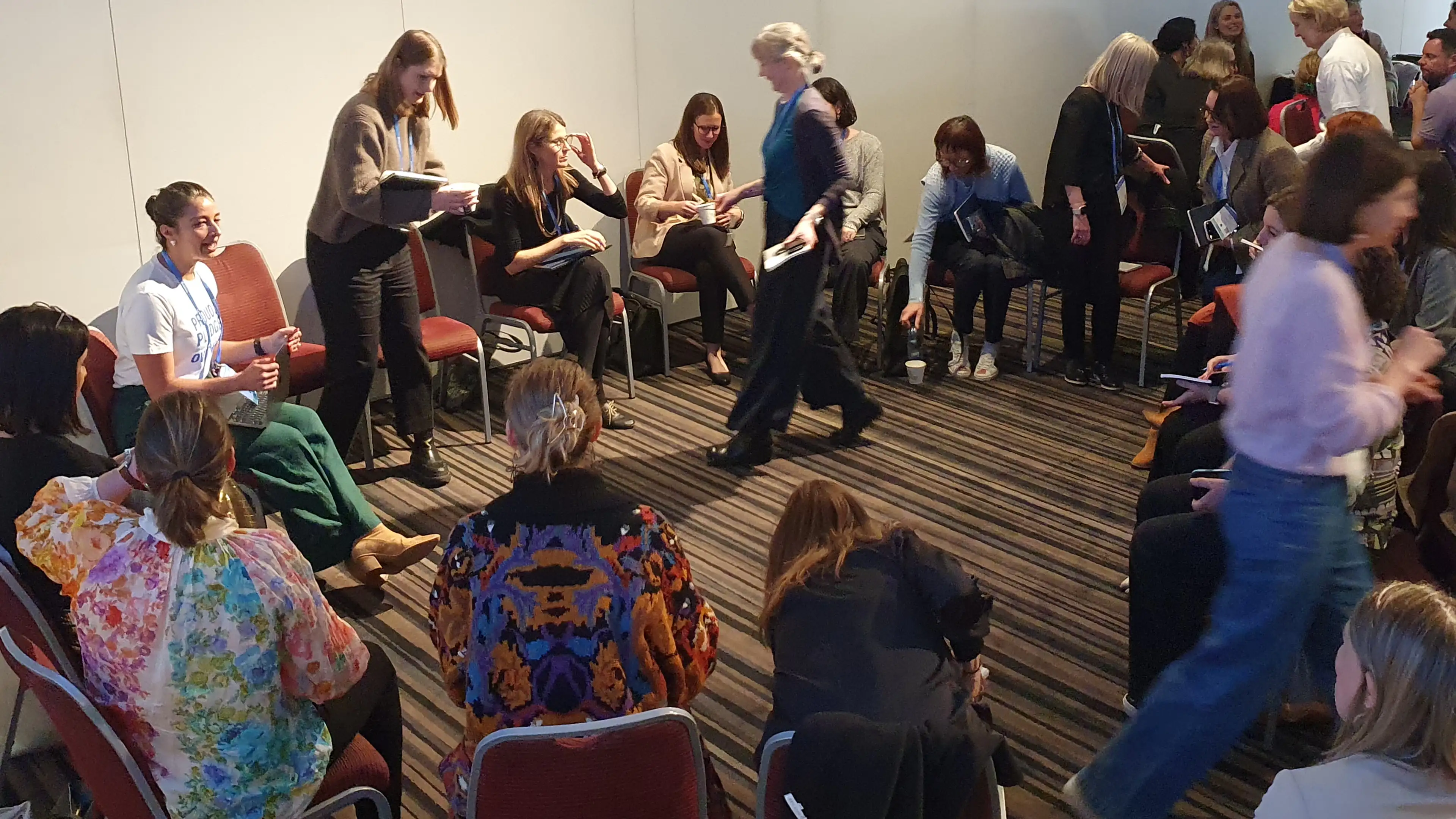
Participants of the second roundtable for the Investment Dialogue of Australia's Children in Adelaide.

INVEST: Investment Dialogue for Australia’s Children

Investing in collaboration with others


It’s not possible for any one organisation or government to create positive, intergenerational change on their own. For PRF, working alongside peers, partners, and together with government on initiatives such at the Investment Dialogue for Australia’s Children, is necessary to ensure a future where people and places have what they need to thrive.

The Investment Dialogue for Australia’s Children is a 10-year collaboration between government and philanthropy to improve the wellbeing of children, young people, and their families, by working with communities to make long-term, intergenerational change.

The first Investment Dialogue roundtable in December 2023 signalled a new way of working, and saw the Australian Government meet with 20 Australian philanthropies, including PRF, to sign the Working Together Agreement. It supports a more aligned and targeted approach by coordinating investments from philanthropy and government, while working with communities and existing organisations on a range of projects and systems reforms that place children and young people at the centre.

The Investment Dialogue is a unique opportunity to make a real difference with innovation across sectors, and in partnership with communities. At the time of the roundtable Treasurer the Hon. Dr Jim Chalmers MP said, “Aligning government efforts with the substantial investments of the philanthropic community is crucial if we’re going to make progress on addressing disadvantage.”

Since the initial meeting, First Nations and Community Leadership Councils have been established as guiding and advisory bodies. The Leadership Councils help to amplify the voices and perspectives of First Nations peoples and community members, creating a platform for meaningful contributions that ensure the Investment Dialogue considers the nuanced needs of communities.

In November this year, the Dialogue met for the second time, and together committed to a range of outcomes, including collaborating with up to 50 communities by 2030, to better support community-led change that achieves tangible outcomes for children, young people and their families. The Dialogue will coordinate philanthropic and government engagement with the communities, involve local leaders in decision-making and allocate funding according to community aspirations, helping to reduce the burden of seeking support and investment.

This collaboration will include partnering with three place-based community partners to co-design innovation zones. These zones will provide an opportunity for established place-based approaches to design the enabling reforms needed to break through major barriers for achieving intergenerational change.

Philanthropy also announced more than $47 million in co-investments in organisations working within the Dialogue’s priority outcome areas, such as the Cornelia Program, that provides pregnant women who are experiencing homelessness or insecure housing with a pathway to safe housing, social and community supports, and individualised health care.

“We are only at the start of what’s possible with the Investment Dialogue,” said Head of Children Hannah Barber. “PRF has so far committed more than $38 million to Investment Dialogue initiatives that will support children, families and communities have what they need to thrive. The return on that investment can only be greater if we listen to the needs of communities, from the voices in communities, and work in partnership with others to respond.”

Former ASA employee Blake Morrison, now a Spatial Analyst with the University of New England. Courtesy ASA.

INVEST: Australian Spatial Analytics

Investing in unique talent

Before Blake Morrison found employment with Australian Spatial Analytics (ASA), he struggled to find supportive and long-term work. After gaining invaluable geospatial skills from ASA’s on-the-job training, ASA helped him transition his employment to a multi-year contract at the University of New England’s Applied Agricultural Remote Sensing Centre as a Spatial Analyst.

“When I was at ASA, I loved the variety of work, and applying my brainpower and having it potentially benefit ASA and client projects,” says Blake. “I felt freed from the shame cycle of Centrelink and feel like ASA has allowed me to maintain and enhance my job prospects.”

There are more than 100 young neurodivergent adults employed by ASA, one of Australia’s largest and fastest-growing work-integrated social enterprises which provides career pathways in the geospatial and engineering professions – industries with critical skills shortages. Team members use their unique cognitive talents, such as attention to detail, pattern recognition and memory retention, to deliver professional ‘big data’ services for multiple industries and all levels of government. ASA’s aim is to be a career starting point for young neurodivergent adults so that they can eventually transition their employment to other inclusive organisations.

In mid-2023, PRF invested $5 million in ASA through a blended finance arrangement – half the funds as a grant, and half as an impact investment – for the social enterprise to scale its operations and provide more employment opportunities for young neurodivergent people, who face an unemployment rate of 34 per cent – 10 times the national average.

More than one year on, ASA CEO Geoff Smith says the finance has helped the organisation to increase its impact.

“This blended finance partnership was monumental for ASA,” he says. “It shows that with some tailored support, social enterprises like ASA can mature past the grant cycle and create systemic impact over the long term. The capital has allowed ASA to scale its impact across Australia and facilitated the employment of 40 new young autistic and neurodiverse adults in the first year.”

PRF Chief Impact Officer, Ben Gales says that investing PRF’s resources in innovative ways can help unlock sustained impact across the sector.

“We know that many for-purpose organisations are keen to become more sustainable and less reliant on grants but can struggle to access traditional finance. PRF’s blended finance investment in ASA, in which the grant component funds the social impact (employment support for young neurodivergent people) and patient capital for expanding its commercial operations – has given ASA the capacity and freedom to scale, and provide employment and support to young neurodivergent people for the long-term.”

Geoff Smith was named the 2025 Queensland Australian of the Year, and in the next year, ASA anticipates it will support more than 50 people into new and sustainable employment.

Jocelyn King, Founder and Chair of the Board of First Australians Capital.

INVEST: First Australians Capital

Investing in self determination


According to Supply Nation, for every dollar of revenue, Indigenous businesses create $4.41 of economic and social value, yet many First Nations entrepreneurs face barriers to accessing the appropriate capital needed to start and scale their businesses. Access to commercial lending can be challenging for First Nations businesses due to low intergenerational wealth transfer, lower rates of home ownership, and difficulty satisfying commercial lending criteria.

PRF partner First Australians Capital (FAC), an Indigenous-led organisation providing capacity building services and access to capital for Indigenous businesses, is trying to address these barriers. FAC is focused on economic independence and self-determination for First Nations entrepreneurs, helping to address racial inequity in Australia’s finance sector.

PRF first supported FAC in 2020 with a small impact investment in a pilot fund, and since then has provided a range of support including $10 million in grant funding, non-financial technical assistance, and more than $5 million repayable finance to FAC’s Catalytic Impact Fund, which connects investment markets with the Indigenous economy, offering accessible, patient debt finance to support Indigenous businesses.

Ben Smith, PRF’s Head of Impact Investing, says PRF’s support of FAC is part of a larger effort to invest in community-led funds, a strategic focus for PRF’s impact investing team since 2023.

“We believe that those with lived experience of societal and environmental challenges are best placed to disburse capital to the communities they serve.

“By enabling communities to hold their own capital, power dynamics can be redressed, and funds can flow to those who can create the greatest impact.”

The Catalytic Impact Fund, which launched earlier this year, has already issued $8 million in funding to Indigenous-led businesses, enabling entrepreneurs the opportunity to thrive and contribute to larger scale economic development. In the two years since FAC started raising funds for what would eventually become the Catalytic Impact Fund, more than 200 businesses were supported creating more than 1,800 economic participants through employment, business ownership and supply chain enabling within the Indigenous economy.

Ben says that by seeding and supporting community-led funds owned and driven by those with deep sector knowledge and lived experience, PRF can help “increase the market of sustainable impact funds and attract capital from new and diverse sources.”

The Chair of FAC’s Board, Jocelyn King, says that PRF’s support has empowered the organisation to decide how to approach its strategy to better support First Nations businesses and entrepreneurs and create more opportunities for Indigenous peoples.

“PRF’s commitment to FAC is allowing us to unlock innovation and self-determination for hundreds of Indigenous businesses and founders,” she says.

“FAC is building a community of investors and investees premised on overcoming systemic barriers to finance, driving a new economy and building economic independence for Indigenous people and communities.

“Big social change occurs when we all work together.”

Pay What it Takes masterclass at the 2024 Philanthropy Australia conference.

BUILD: Pay What it Takes

Building tools and coalitions to break the NFP ‘starvation cycle’


When it comes to funding the work of not for profits, there's a critical yet often overlooked aspect: indirect costs. These ‘invisible’ expenses—ranging from IT and marketing to staff training—are essential for delivering impactful programs and enduring outcomes. And yet, they often go underfunded, leaving NFPs struggling to effectively achieve their purpose.

2022 research by Social Ventures Australia and Centre for Social Impact, ‘Paying what it takes: funding indirect costs to create long-term impact’ (PWIT Research), revealed that NFPs in Australia experience chronic underfunding of indirect costs, perpetually receiving less funding than what is required to deliver programs. There has also been a perception from funders, donors, and charities themselves, that lower overheads are markers of an efficient and effective organisation. All of this leads to lower capability and effectiveness across the sector, and a ‘starvation cycle’ where NFPs underinvest in their core operational and infrastructure needs to keep overheads low.

The Pay What It Takes (PWIT) initiative in Australia is a growing response to this research and comprises individuals, philanthropic funders and for-purpose organisations committed to understanding what it actually takes to create impact and paying for it. It aims to ensure that for-purpose partners have access to the resources, connections and support required to create impact now, and over the long term.

Inspired by the PWIT Research, in addition to implementing its own PWIT policy, PRF has been supporting a diverse team of experts to co-design PWIT principles and guidelines to translate the research into action. The team of experts soft-launched the suite of tools, which reflect the knowledge, experience and perspectives of diverse actors across the for-purpose sector, at the 2024 Philanthropy Australia Conference. Complementing this work, PRF also supported the ‘Reframe Overheads’ campaign, led by a committed group of NFP fundraisers who are supporting NFPs to apply PWIT insights with practical guides on reframing the narrative about indirect costs to communicate better about overheads with boards and funders.  

Collaboration between these two groups, stewarded by PRF, has strengthened the work, enabling stronger sector alignment. The full set of tools, principles and guidelines will be launched early in 2025.

“Studies have shown no correlation between overhead ratio and cost-effectiveness,” says Jo Taylor, previous Chair of the PWIT Steering Committee.

“Indeed, there is clear evidence that insufficient spending on indirect costs can potentially reduce overall effectiveness.

“Our goal is to encourage a shift in mindset - to ignite conversations about how to ensure that the organisations we fund really do have a solid base from which they can contribute to change, and how we can plug some of those gaps that exist because of the way that funding is distributed, and the way organisations are viewed and judged.”

PRF’s Chief Alliances Officer Liz Yeo has firsthand experience managing a charitable organisation and understands the pressure from funders to underestimate indirect costs and continually do more with less.

“We need to stop praising charities for their ability to deliver impact on the smell of an oily rag,” says Liz, “and instead properly fund them to do the complex and innovative work required to create long-term social change.”

Image courtesy of Wellsprings for Women, a 2023 Specialist DFV Services grant recipient.

BUILD: Domestic and family violence portfolio

Building our understanding of domestic and family violence in Australia


Since 2020, PRF has granted approximately $23 million directly into work to address domestic and family violence (DFV) in Australia and published six stand-alone reports. PRF’s engagement with the DFV sector has been deliberate, prioritising depth of understanding over speed. This has enabled us to build connections in the sector, build evidence about the realities confronting frontline services, as well as build internal understanding and knowledge about the DFV landscape in Australia.

“As newcomers to funding this sector, we were mindful not to rush, nor ignore the work and advocacy done by many players over many years to keep Australian families free from harm,” says PRF Head of Families Jackie Ruddock, who has led PRF’s DFV work for the past five years. “There has been a groundswell of recognition of DFV in Australia but the existing, collective response has not lessened its prevalence and impact, and services do not have the resources to meet increased demand.”  

PRF began its work in DFV against the backdrop of the COVID-19 pandemic, providing relief to 70 women’s shelters with almost $3 million in funding. We took an action learning approach to understand the specialist needs of the sector and heard that short term, program-based government funding does not match the complex nature of the work, nor enable organisations to undertake early intervention and prevention.

Building on these lessons, PRF held an open grant round for specialist DFV services in 2023, awarding $13.6 million to 58 organisations (including $6.3 million to First Nations community-controlled organisations), again bringing the grant recipients together for collective learning.

“Early research showed that knowledge and practice in the sector remains trapped in a locality as mechanisms for sharing aren’t obvious or available,” continues Jackie, “so we were keen to create a network of our partners to share insights and learnings, build relationships, and inform PRF’s future work to help tackle DFV in Australia.”

Evidence gathered by ResearchCrowd from the network of community-controlled organisations, highlights the need to understand what family violence looks like for First Nations people from a First Nations perspective, and to foreground self-determination in the unique response required to address DFV in First Nations communities. Acknowledging the importance of backing First Nations-led approaches will continue to be a priority in PRF’s future investment in the DFV space.

“It has also become clear from other specialist services that early intervention with children, young people and the whole family represents huge promise in terms of supporting healing and breaking intergenerational cycles of violence,” says Jackie.

She says the pattern of funding, followed by considered learning has been critical to planning PRF’s future investment.

“We’ve used what we’ve learned from research and conversations with people in the DFV field to find critical intervention points that, for whatever reason, have traditionally received less focus and funding. It’s about using our investment in a way that we can start to shift the conditions that trap people in cycles of violence, so that all families are stable.”

BUILD: Gujaga Foundation

The Justice Reform Initiative team at their 2024 Reintegration Puzzle conference.

INFLUENCE: Justice Reform Initiative

Influencing the conversation about justice


Building relationships, influencing conversations, and shifting narratives. It’s not what most would think of as the first line of defence against a failing justice system, but for PRF partner Justice Reform Initiative (JRI), an advocacy organisation working to reduce the number of people in Australian prisons, these three elements are key to building a sustained shift in public political narratives away from 'tough on crime' approaches and towards evidence-based justice policy.

“We know that jailing is failing,” says JRI Executive Director Dr Mindy Sotiri, “and that the over-use of incarceration causes enormous harm, is ineffective at addressing the drivers of crime, and is a misuse of taxpayer dollars.

“Too many people are ‘managed’ in prison settings, instead of having access to critical resources, supports and care in the community.  For example, without appropriate housing, healthcare and job opportunities there is a much higher chance people will come into contact with the justice system. The majority of people entering prison have experienced multiple and intersecting disadvantage, and prisons operate to exacerbate and entrench this disadvantage.”

Prisons cost the Australian economy $6.3 billion annually, yet the evidence shows that prison does little to address the drivers of incarceration or reduce crime, and in fact increases the likelihood of a person reoffending. Regardless of historically low crime rates in most of the major offence categories, almost all Australian jurisdictions are investing in new prisons or prison infrastructure.

In 2024 the Northern Territory and Queensland elections were fought on political commitments to reduce crime, and despite the evidence that imprisonment has no significant impact on crime rates, prison is still centred as the main response.

Together with an alliance of people who share long-standing professional experience, lived experience and/or expert knowledge of the justice system, JRI has been focused on building relationships, engendering commitments to move away from law-and-order politics and policy making and towards cross-party evidence-based approaches to justice.

In 2020 PRF provided $500K seed funding to establish JRI, and in 2021 provided $3.2 million to enable JRI to advocate key reforms to state criminal justice systems. In the three years since, JRI has built a reputation as a trusted voice on justice system reforms, publishing 23 reports and discussion papers, and attracted significant media engagement to bring evidence more sharply into the conversation about justice.

“Influencing conversations and shifting narratives takes time,” says PRF Head of Community Wellbeing & Justice Dominique Bigras, “but by working collaboratively with other advocates in this space, JRI has been able to help raise awareness of the failures of our prison system and start to build the case for prison reform and support for investment in community-led prevention.”

In October this year PRF granted JRI a further $6.8 million over five years to drive a national public facing advocacy campaign to highlight the failure of incarceration and mobilise communities and parliaments around Australia to shift from a political and policy preference for imprisonment to more effective and economically sustainable justice approaches.

Angelica Ojinnaka, We are Blacktown. Image by Mridula Amin.

INFLUENCE: Welcome to Blacktown

Elevating community voices


Blacktown lies 34 kilometres northwest of the Sydney CBD on the traditional lands of the Darug people. With nearly 400,000 residents, Blacktown is the most populous LGA in NSW, and the fourth largest in the country. By 2036, its population is expected to exceed that of Tasmania and annual regional economic activity is forecast to exceed $26 billion.

Blacktown is also one of the most culturally diverse areas in the country with half the people in the LGA born overseas and residents hailing from 76 countries.  

When investing in communities, the evidence shows that better outcomes are achieved when the voices of those affected are heard. With so many diverse voices in the community, how do you paint a picture of the challenges and opportunities that exist within a place?

Over six months in 2022 and 2023, UTS Impact Studios, supported by PRF, conducted almost 100 interviews with people connected to Blacktown, exploring and investigating the question of how communities thrive. The project sought to learn about Blacktown’s many and varied communities, together with the innovative and inspired social change work that is happening there.

The result is Welcome to Blacktown, a place-based audio project that launched in September this year.

The Impact Studios team listened to people tell stories of their lives, on their own terms: their families, their passions, their work and what motivates them to do it, their challenges and achievements. From this process, two audio works were created: We are Blacktown and Sink or Swim.

“We are proud to showcase place-based audio storytelling,” says UTS Interim Pro Vice Chancellor, Social Justice and Inclusion Amy Persson, “as a way to listen to, document and make accessible individual and community stories as critical evidence that can guide place-based approaches to policy and social change.”

Welcome to Blacktown Executive Producer Olivia Rosenman says, “In being listened to, and heard, this project enhances community belonging, empowers active citizenship and connects Blacktown’s residents to a shared story, supporting the way they imagine and enact a thriving future.”

PRF Chief Alliances Officer Liz Yeo says, “It’s so important to listen to and capture voices on the ground, to hear first-hand about the experiences of residents – what they love about the area and the challenges of living there.

“The range of stories elevate community voices and provide a wonderful exploration into some of the more surprising elements of living in a community, elements which might otherwise go unnoticed.”

The audio project is part of a greater investment in the Blacktown area. In October this year, PRF opened expressions of interest for grants to support community networks working in Mt Druitt, in the Blacktown LGA.

“We believe that strong community networks are necessary for places to imagine and lead their own futures,” continues Liz, “and this funding opportunity will help organisations already doing good work together in Mt Druitt to be better connected and resourced for their work.”

Maw on the basketball court

INFLUENCE: TARGET ZER0

Maw lives with his mum and eight siblings in the Western suburbs of Melbourne. He says that growing up he always loved basketball because it gave him a sense of peace.

“It took my mind off a lot of things,” says Maw. “The things I was going through at home, the things I was going through at school.

“I just wanted to play. But not everything could be paid for.”

When Maw was 14 his family had to move house, and the family couldn’t find a school in their new area that would accept his enrolment. So, he stopped going.

“As a young person, when you don’t have school or anything to do during the week - you start doing different things to kill time and make money,” he says.

“I was young, I couldn’t work. I started hanging out with the wrong crowd. Started stealing from shops, then it went to stealing cars.”

Eventually, Maw spent just over two years in youth detention.

Anoushka Jeronimus from community legal centre WEstjustice says stories like Maw’s are not uncommon.

"Crime prevention is not just the job of criminal justice system and not just the job of the young person and their family," she says.

"It requires the whole of the community. TARGET ZER0 provides us with the opportunity to do just that: bring the whole of the community together in Melton, Brimbank and Wyndham."

In 2022, WEstjustice was awarded $500,000 seed funding from PRF to establish TARGET ZER0, together with Centre for Multicultural Youth. TARGET ZER0 is a ten-year justice reinvestment plan working towards ending both the overrepresentation and criminalisation of young people in the western suburbs of Melbourne. The initiative takes a collective impact approach, bringing together a coalition of stakeholders to address the common overlapping systemic and structural factors that can cause young people to have contact with the justice system, such as access to education, health services, employment, and housing.

"TARGET ZER0 is not only bringing together the whole community around its twin goals but critically, enabling a shared focus on their root causes across multiple systems to help young people like Maw and his family thrive in our community."

Earlier this year, PRF provided an additional $7.45 million to scale TARGET ZER0, and PRF Head of Community Wellbeing & Justice Dominique Bigras says the investment in this targeted approach will help divert young people from the justice system.

“When young people don’t have access to what they need to thrive, their risk of contact with the justice system increases,” she says. “TARGET ZER0 will help better coordinate and target services so young people don’t fall through the gaps.”

Maw says by having the right support he’s been able to develop a routine, begin working towards something, and has become a totally different man.

“When you get out of detention, especially for a young person, if they have no one around to support them, they're just going to go back to the same stuff,” says Maw.

“I was able to get that support from a lot of people. And that really helped me turn my life around.”

Scroll up and down to navigate